
If you are trying to figure out the best type of back scratcher for your back, the answer depends on what kind of itch you are trying to solve. Some back scratchers are made for light occasional scratching. Some are better for washing or brushing. Others are built for deeper itch relief and harder-to-reach areas.
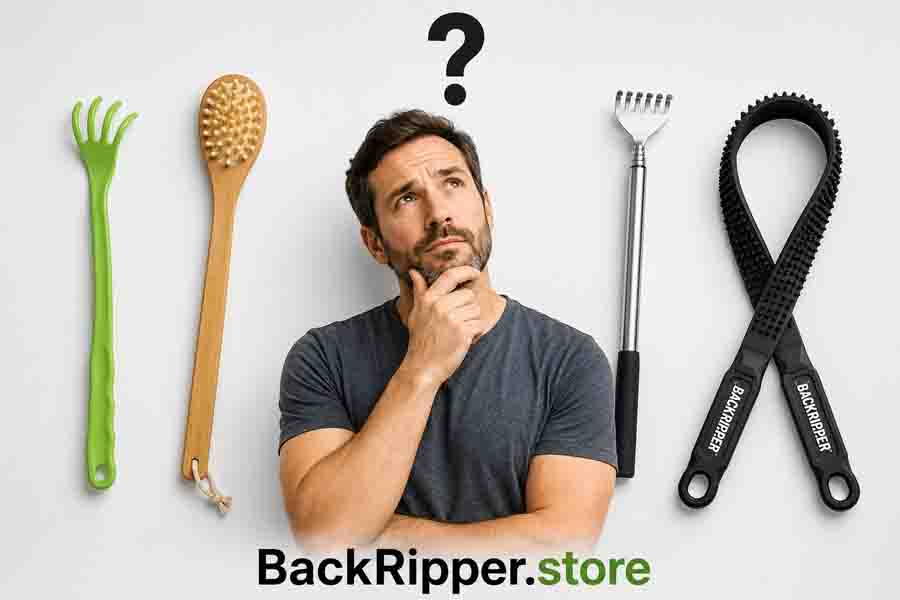
The problem is that a lot of people buy the first cheap back scratcher they see, then end up disappointed because it bends, breaks, feels too soft, or only scratches one tiny spot. So instead of asking which back scratcher looks the cheapest or most familiar, it makes more sense to compare the main types and decide which one actually fits your back.
Below are four common types of back scratchers and how they compare.
Plastic Claw Back Scratcher
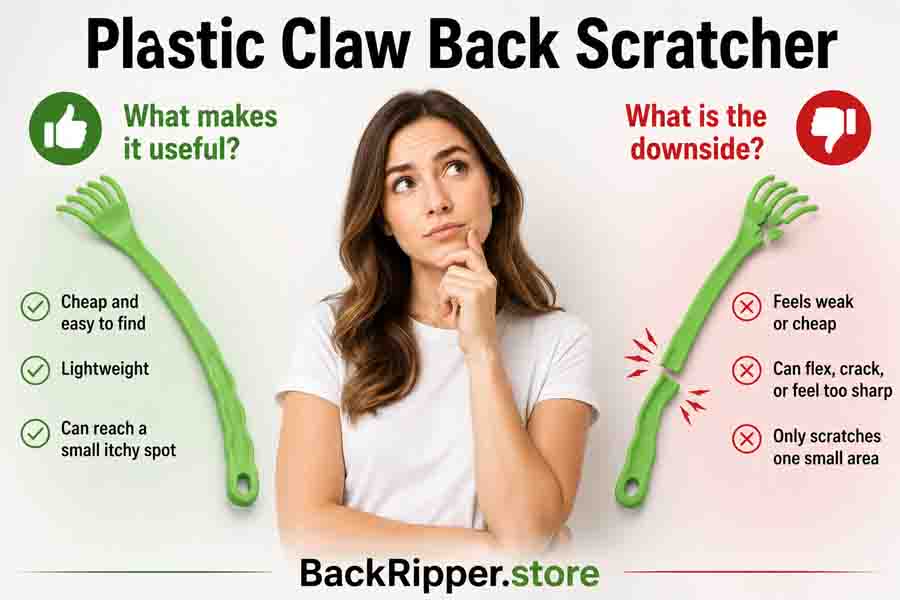
What makes a plastic claw back scratcher useful?
A plastic claw back scratcher can be useful because it is usually cheap, lightweight, and easy to find. The claw shape can reach a specific itchy spot, and for light scratching, it may be enough for someone who only needs quick relief once in a while.
What is the downside of a plastic claw back scratcher?
The downside is that many plastic claw back scratchers feel weak or cheap. The claws may flex too much, crack, or feel sharp in an uncomfortable way. They also usually scratch one small area at a time, which is not ideal when your whole back itches.
Brush-Style Back Scratcher
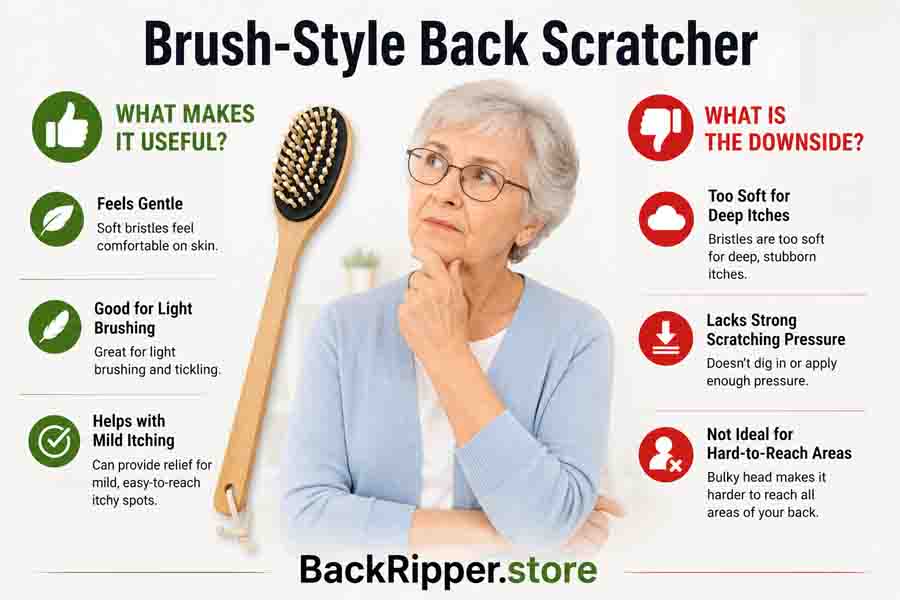
What makes a brush-style back scratcher useful?
A brush-style back scratcher can cover more area than a small claw, and some people like the softer feel. It can also work well if you want something that feels more like brushing or light exfoliation rather than aggressive scratching.
What is the downside of a brush-style back scratcher?
The downside is that many brush-style scratchers are too gentle for deep back itches. They may feel nice, but they often do not deliver enough pressure when you have a stubborn itch between your shoulder blades or across your lower back.
Telescoping Back Scratcher
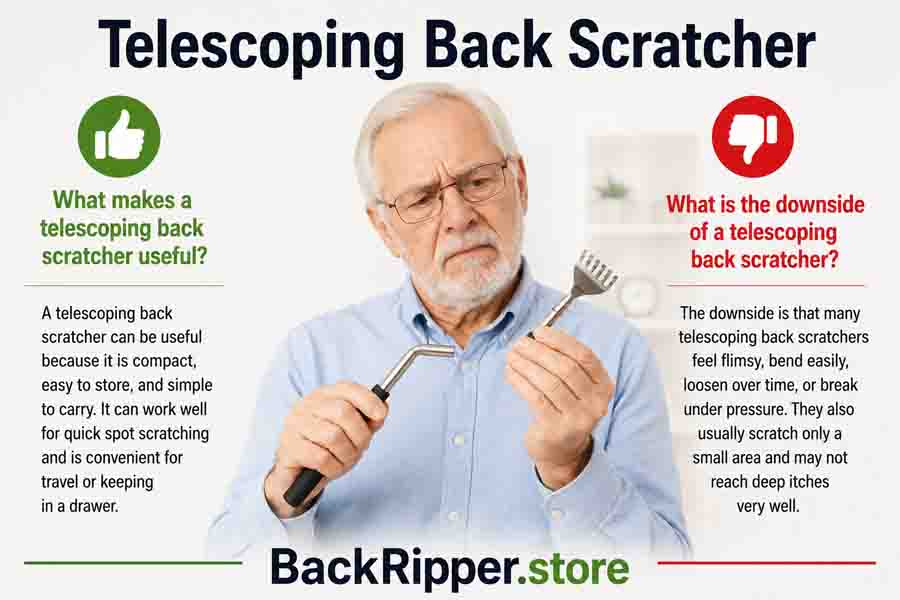
What makes a telescoping back scratcher useful?
A telescoping back scratcher is useful because it is compact and easy to store. You can extend the handle when you need it and collapse it when you are done. For light, occasional scratching, that convenience makes it popular.
What is the downside of a telescoping back scratcher?
The downside is that telescoping handles can bend, loosen, or collapse when you press too hard. The small claw at the end may reach the itch, but it often does not give enough pressure or coverage for people who want serious back itch relief.
Flexible Two-Hand Strap Back Scratcher
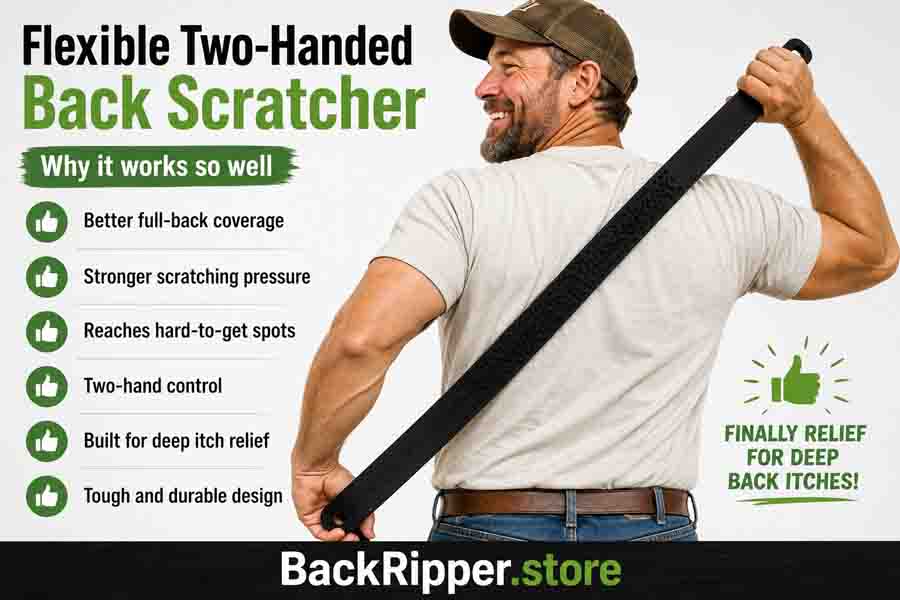
What makes a flexible two-hand strap back scratcher useful?
A flexible two-hand strap back scratcher gives you more control because both hands guide the scratching motion. Instead of poking at one spot, you can pull it across your upper back, middle back, lower back, and shoulders with stronger, more even pressure.
What is the downside of a flexible two-hand strap back scratcher?
The main downside is that it is not as tiny or pocket-sized as a telescoping scratcher. It is built more like a real back-scratching tool than a small novelty item, so it is best for people who actually want stronger pressure and full-back coverage.
Which Type of Back Scratcher Is Best for Your Back?
If you only need a light scratch every now and then, a plastic claw or telescoping back scratcher might be enough. They are cheap, easy to find, and simple to use.
If you want something softer or more like a brush, a brush-style back scratcher may feel better. That type can work for light scratching or gentle back brushing, but it may not satisfy a deeper itch.
But if your real problem is deep back itch relief, stronger scratching pressure, and reaching more of your back, the flexible two-hand strap design is the strongest option of the four.
That is where BackRipper™ Backscratcher fits.
BackRipper™ Backscratcher is a flexible two-hand back scratcher built for people who are tired of weak plastic claws, flimsy telescoping handles, and soft scrubbers that barely touch the itch. The two-hand design lets you pull across your back with control, instead of trying to angle a small claw into one perfect spot.
Why BackRipper™ Backscratcher Makes Sense
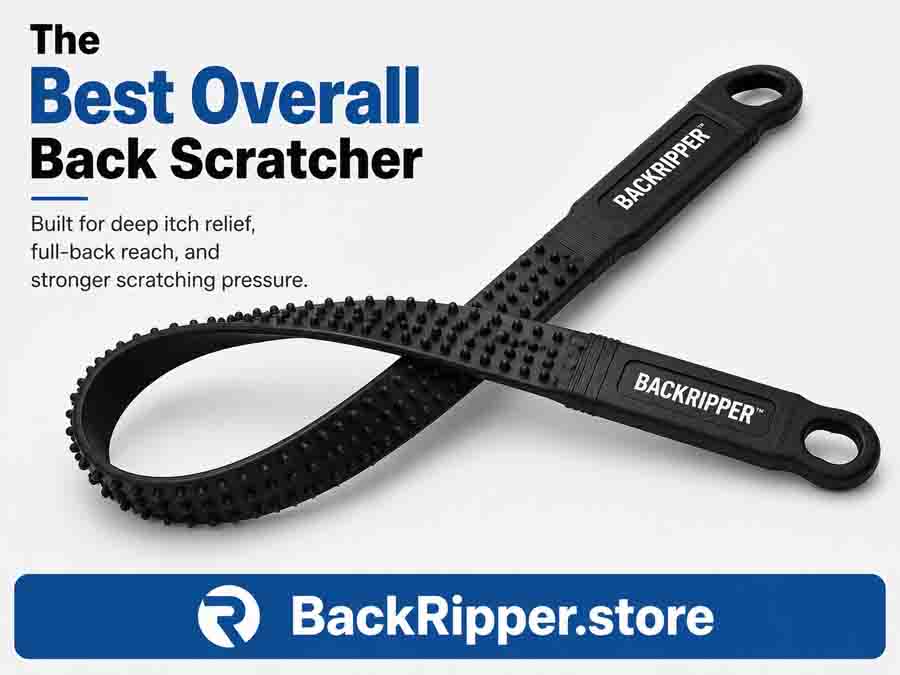
BackRipper™ Backscratcher is designed for people who want a more serious answer to back itch relief. It is not meant to be a gentle shower brush or a cheap throwaway scratcher. It is built for stronger pressure, better reach, and full-back coverage.
The flexible strap design helps you scratch in different directions. You can use it diagonally, vertically, or side-to-side depending on where the itch is. That matters because back itches are not always in one neat spot. Sometimes the itch is between your shoulder blades. Sometimes it is across the lower back. Sometimes your entire back needs relief.
With a small claw or telescoping stick, you are usually chasing one little area at a time. With a two-hand strap-style back scratcher, you can cover more of your back and control the pressure yourself.
Final Thoughts: The Best Type of Back Scratcher Depends on the Itch
The best type of back scratcher for your back depends on what you need.
A plastic claw back scratcher may work for quick light scratching.
A brush-style back scratcher may work for softer brushing.
A telescoping back scratcher may work if you want something small and easy to store.
But a flexible two-hand strap back scratcher is the better choice if you want stronger pressure, deeper itch relief, and full-back coverage.
For people who are tired of weak back scratchers that bend, break, or barely scratch, BackRipper™ Backscratcher is built to be a more powerful option.
If you want the best type of back scratcher for serious back itch relief, a flexible two-hand strap design is hard to beat.
Frequently Asked Questions
What is the best type of back scratcher?
The best type of back scratcher depends on what kind of itch you have. For light scratching, a plastic claw or telescoping scratcher may work. For deeper itch relief and better full-back coverage, a flexible two-hand strap back scratcher is usually a stronger option.
Are telescoping back scratchers better than plastic claw back scratchers?
Telescoping back scratchers are convenient because they extend and collapse, but many still use small claw heads. They can be better for reach, but not always better for pressure or durability. For deep itches, they may still feel too weak.
Why is a two-hand back scratcher better for deep back itches?
A two-hand back scratcher gives you more control over pressure and direction. Instead of scratching one small spot with a claw, you can pull across larger areas of your back and reach hard-to-reach itch zones more easily.