
If you are searching for a heavy duty back scratcher, chances are a flimsy plastic claw or lightweight telescoping stick is not what you have in mind. Some people want a back scratcher that feels more like a real tool — something durable, easy to control, capable of reaching the entire back, and designed to provide strong scratching pressure where an itch is hardest to reach.
That is where the design of a heavy duty back scratcher becomes important. Strength is not just about making a product thicker or heavier. A good heavy duty design should combine durability, reach, control, scratching surface, and enough flexibility to follow the shape of your back.
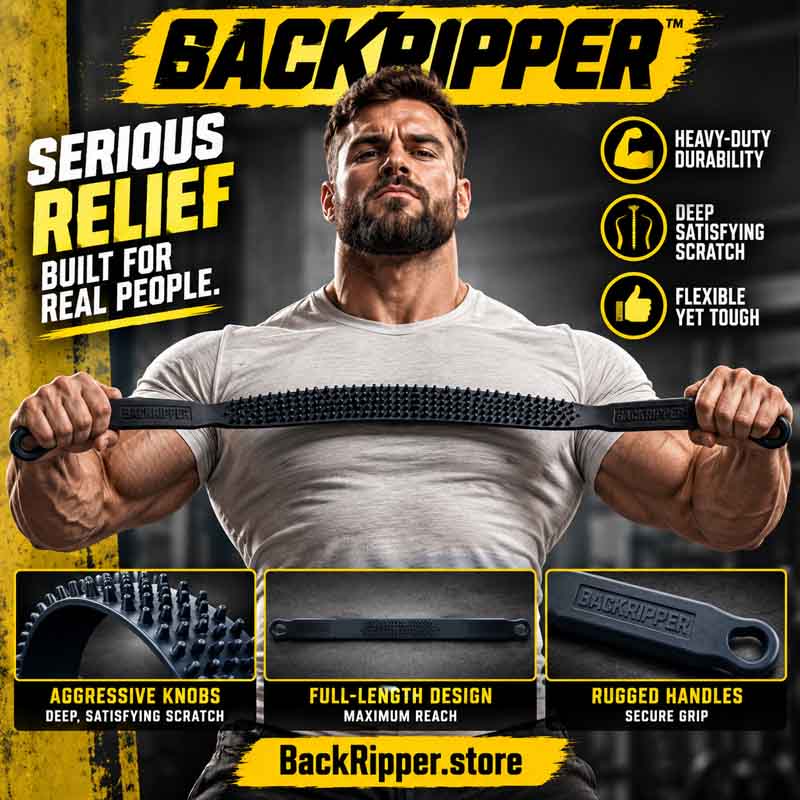
BackRipper™ Back Scratching Strap was developed around that idea. Instead of relying on one small claw at the end of a stick, BackRipper™ uses a flexible two-handed rubber strap with hundreds of firm raised scratching knobs. The result is a completely different approach to full-back scratching.
What Makes a Back Scratcher Heavy Duty?
The words “heavy duty” are used on a lot of products, but they should actually mean something. When it comes to a back scratcher, a heavy duty design should be able to handle repeated use and stronger scratching pressure without feeling fragile.
There are several things worth looking for when comparing heavy duty back scratchers:
- Strong construction: The product should not feel like it is going to snap, bend permanently, or fall apart after repeated use.
- A substantial scratching surface: A larger contact area can cover more of the back than a small claw or narrow scratching head.
- Good grip and control: You should be able to control the amount of pressure and the direction of the scratching motion.
- Full-back reach: A heavy duty tool is not very useful if it still cannot reach the spot that itches.
- Comfortable flexibility: Some flexibility allows a back scratcher to follow the contours of the shoulders, upper back, middle back, and lower back.
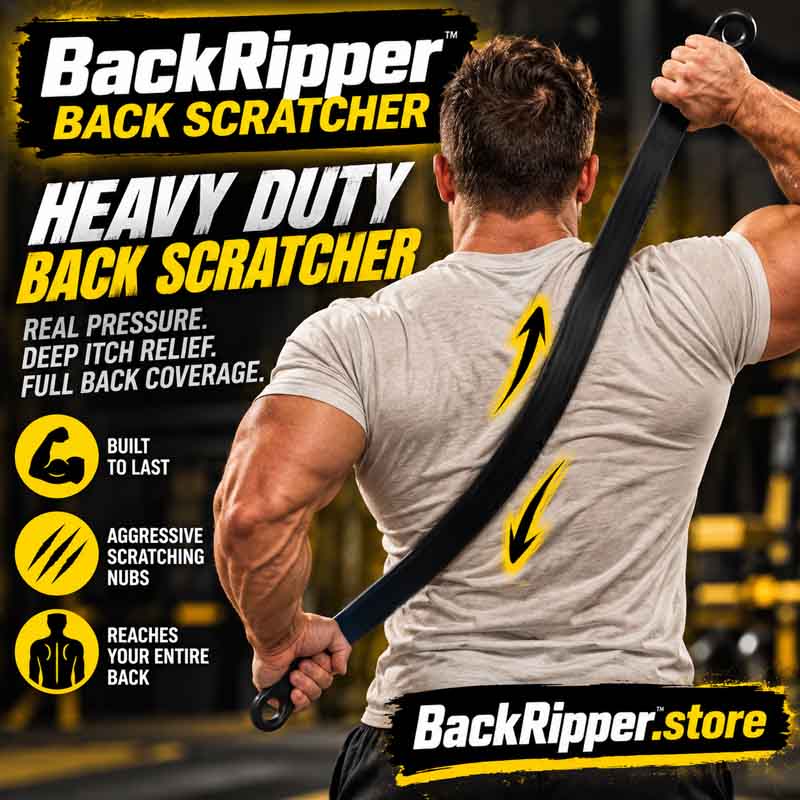
BackRipper™ combines these characteristics in a flexible rubber strap design. Instead of holding one end and trying to reach behind yourself, you hold both handles and pull the scratching surface across your back.
If you want to compare several different designs first, see our guide to the best back scratchers and how the major styles differ.



Why Cheap Plastic Back Scratchers Break or Bend
Many inexpensive back scratchers are made from thin plastic, lightweight metal, or small telescoping sections. Those designs have their place, especially when portability and low cost are the main priorities. But they can also have limitations when someone wants stronger scratching pressure.
A long, narrow back scratcher acts like a lever. The farther the scratching head is from your hand, the more stress can be placed on the shaft when you press harder. Plastic claws can crack, thin handles can flex, and telescoping sections can feel loose after repeated use.
Another limitation is the amount of skin contacted at one time. A traditional claw may scratch only a small area with each stroke. That can work perfectly well for a single itch, but it may require repeated repositioning when your entire upper or lower back is itching.
A heavy duty back scratcher takes a different approach. Rather than concentrating all of the pressure at the end of a thin handle, a strap-style design spreads the scratching surface across a much larger section of the back.
This is also why BackRipper™ does not try to imitate the familiar plastic claw. It was designed as a different category of back scratcher altogether.
Heavy Duty Rubber vs. Bamboo vs. Telescoping Back Scratchers
There is no single back scratcher design that is perfect for every person. Bamboo, telescoping metal, plastic claws, and flexible straps all work differently.
Bamboo Back Scratchers
Bamboo back scratchers are simple, inexpensive, and have been used for years. They are usually rigid and have a small hand-shaped or claw-shaped scratching end. They can provide good pinpoint scratching, but the rigid shape limits how the tool follows the contours of your back.
Telescoping Back Scratchers
Telescoping back scratchers are compact and convenient. They can extend significantly farther than their stored size, making them useful for travel or keeping in a desk drawer. Their tradeoff is that many designs use a relatively small scratching head and a narrow telescoping shaft.
Flexible Rubber Back Scratchers
A flexible rubber strap works differently. Instead of reaching backward with one hand, you use two hands to move the scratching surface across your back. This allows short strokes up and down, side to side, and diagonally.
Because the strap can bend around your body, the scratching surface can remain in contact with areas that can be difficult to reach with a straight handle.
BackRipper™ uses a firm flexible rubber construction with raised scratching knobs designed to remain substantial under normal scratching pressure. You can see more about this design on our back scratcher strap and belt guide.
Who Needs a Heavy Duty Back Scratcher?
A heavy duty back scratcher is generally aimed at someone who has already tried lightweight scratchers and wants something more substantial.
It may appeal to people who:
- Prefer firm scratching pressure
- Have difficulty reaching the center of their back
- Want to scratch a larger area rather than one small spot
- Are tired of replacing inexpensive plastic back scratchers
- Want more control over scratching direction and pressure
- Prefer using two hands instead of twisting one arm behind the body
Back itch is extremely common, and there are many possible reasons skin can itch. Dry skin alone can cause significant itching, and the American Academy of Dermatology explains that persistent itching can have many different causes.
A back scratcher is intended to provide temporary physical scratching relief. It does not treat the underlying cause of chronic itching. If itching is severe, persistent, unexplained, associated with a rash, or continues for an extended period, it is worth discussing with a healthcare professional. Mayo Clinic also provides useful information about when persistent itching may warrant medical attention.
Why BackRipper™ Is Built for Strong Scratching Pressure
BackRipper™ was built around one simple problem: many traditional back scratchers do not provide the kind of strong, controlled scratching some people want.
The design uses a long flexible rubber strap with a field of firm raised scratching knobs on the scratching side. Instead of concentrating the action into a tiny claw, those knobs create numerous contact points across the back.
The two-handed design is equally important. Holding both ends gives you control over how tightly the strap contacts your back. You can adjust the pressure by changing how firmly you pull the handles and how quickly you move the strap.
You can also change direction without repositioning the entire tool:
- Up and down for long vertical areas
- Side to side across the middle or lower back
- Diagonal strokes for areas around the shoulder blades and sides of the back
- Short firm strokes when you want more concentrated scratching contact
This is why we describe BackRipper™ as a back scratching tool rather than simply another plastic back scratcher. The purpose is not delicacy. It is controlled, full-back scratching with a durable design.
If scratching intensity is particularly important to you, you may also want to read our guide to choosing the sharpest back scratcher and why “sharp” does not necessarily mean a back scratcher should have dangerous edges.
How to Use a Heavy Duty Back Scratcher Safely
More scratching pressure is not always better. Even with a heavy duty back scratcher, the goal should be satisfying relief without damaging your skin.
Start with light pressure and increase it gradually until you find a comfortable level. With BackRipper™, short controlled strokes usually work better than pulling extremely hard against your skin.
Do not use a back scratcher aggressively over broken skin, open sores, sunburn, irritated rashes, fresh wounds, or areas that are already bleeding. Repeated scratching can irritate skin further, particularly when an underlying skin condition is causing the itch.
The Mayo Clinic guidance on itchy skin notes that repeated scratching can worsen irritation and recommends addressing the underlying cause when itching persists.
For normal everyday back itch, however, having a tool that lets you reach the exact area without twisting your shoulders or rubbing against a wall can be extremely convenient.
A Heavy Duty Back Scratcher Should Be Built to Last
One of the biggest reasons to choose a heavier-duty design is longevity. A back scratcher is a simple product, and ideally it should not feel disposable.
BackRipper™ uses a one-piece flexible strap concept instead of multiple telescoping joints, small moving components, or a thin plastic claw. The handles provide a secure place for each hand, while the central scratching area provides hundreds of raised contact points.
The design is also simple to store. It can hang from a hook, be folded loosely into a drawer, or be kept near the chair, bed, or other place where you normally find yourself needing it.
For someone who scratches their back frequently, those small conveniences matter. The best heavy duty back scratcher is not necessarily the one with the most complicated design. It is the one you can reach for every day, use comfortably, and rely on repeatedly.
Is BackRipper™ the Right Heavy Duty Back Scratcher for You?
If you only need an occasional light scratch in one small spot, a basic bamboo or telescoping back scratcher may be all you need.
If you want stronger scratching pressure, greater coverage, a flexible design, and the ability to control the scratching motion with both hands, BackRipper™ offers a very different experience.
It is designed for people who want a heavy duty back scratcher that feels substantial and provides full-back coverage rather than simply extending a small claw a little farther behind them.
BackRipper™ is built for upper-back itch, middle-back itch, lower-back itch, shoulder-area scratching, and the difficult spots between the shoulder blades that can be frustrating to reach on your own.
You can learn more, see detailed product images, and view the current availability on the BackRipper™ product page.
BackRipper™ — The Back Scratcher That Actually Works.
What makes a back scratcher heavy duty?
A heavy duty back scratcher should be made from durable materials, provide strong scratching pressure, offer good reach and control, and hold up to repeated use without bending, cracking, or feeling flimsy.
What is the best heavy duty back scratcher for strong itching?
The best heavy duty back scratcher for strong itching should provide firm contact, good coverage, and enough control to adjust the pressure. BackRipper™ uses a flexible two-handed rubber strap with raised scratching knobs for strong, controlled full-back scratching.
Is a rubber back scratcher better than a plastic back scratcher?
A rubber back scratcher can be a better choice for people who want flexibility, durability, and broader back coverage. Plastic claw-style scratchers can work well for small areas, but a flexible rubber strap can follow the shape of the back and contact a larger area.
Are heavy duty back scratchers good for hard-to-reach areas?
Yes. A well-designed heavy duty back scratcher can make it easier to reach the upper back, middle back, lower back, shoulders, and the area between the shoulder blades. A two-handed strap design also reduces the need to twist one arm behind your back.
Can a heavy duty back scratcher provide deep itch relief?
A heavy duty back scratcher can provide strong temporary scratching relief by allowing firmer contact with hard-to-reach areas of the back. It does not treat the underlying cause of chronic itching, so persistent or unexplained itching should be discussed with a healthcare professional.
Why choose BackRipper™ instead of a telescoping back scratcher?
BackRipper™ is designed for people who want more coverage and stronger scratching contact than a small telescoping claw usually provides. Its flexible two-handed strap allows up-and-down, side-to-side, and diagonal scratching across a larger portion of the back.