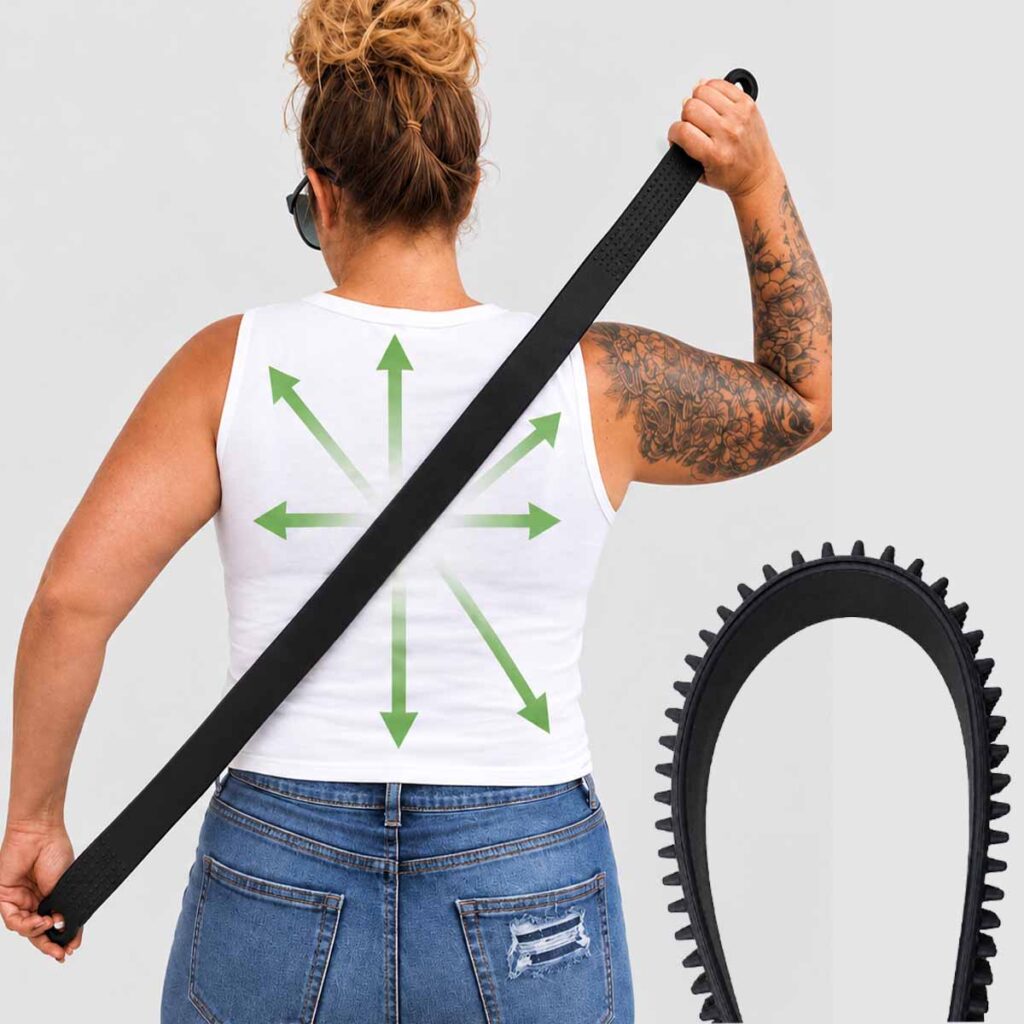
If you are wondering how to scratch your back by yourself, the easiest solution is to use a method that gives you more reach without forcing you to twist your shoulders or strain your arms. You can use your hands, a towel, a doorway, a long-handled back scratcher, or a flexible two-hand back scratching strap depending on where the itch is and how much pressure you want.
The middle of the back is especially difficult to reach because your arms simply cannot comfortably access every area. That is why people end up twisting, stretching, rubbing against furniture, or grabbing whatever long object happens to be nearby.
Some of those methods work in a pinch. Others are much more effective and comfortable for regular use.
If you want to compare different styles of back scratchers, take a look at our guide to the 5 Best Back Scratchers. It explains the advantages and disadvantages of several popular designs.



Why Is It So Hard to Scratch Your Own Back?
Your shoulders and arms have a limited range of motion. Most people can reach part of their upper back and part of their lower back, but the area between the shoulder blades is much harder to access.
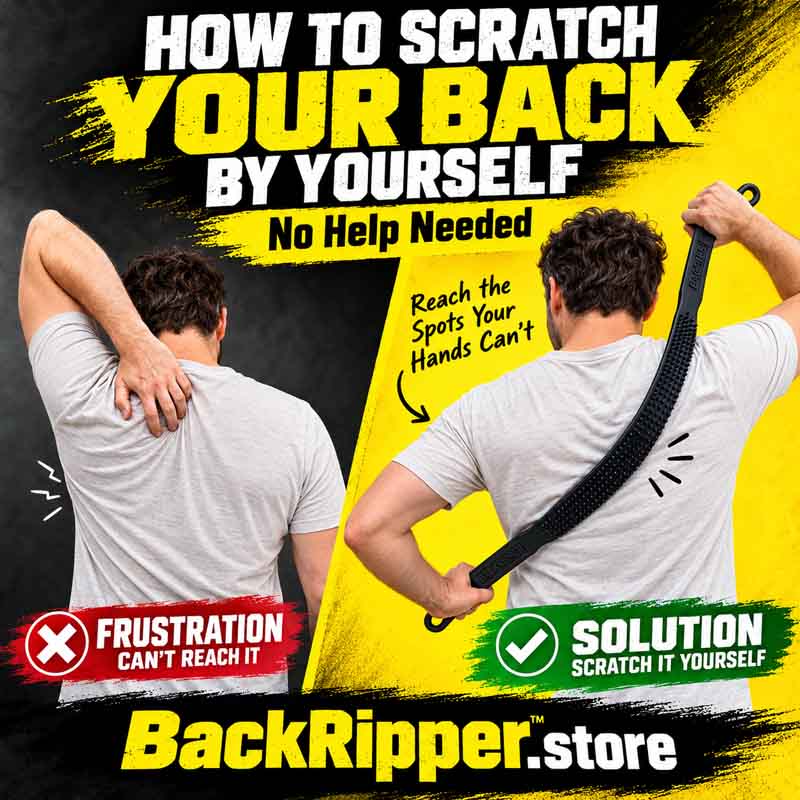
You may be able to touch the itch with your fingertips, but actually scratching it with enough pressure is another story.
This is why an itch in the middle of your back can feel so frustrating. You know exactly where it is, but your hand cannot quite get there.
The goal is to extend your reach without forcing your shoulders into an uncomfortable position.
Method 1: Reach With Your Own Hands
The first option is the most obvious: try reaching the area directly.
For the upper back, bring one arm over your shoulder. For the lower back, bring your hand around your side and upward.
This can work for areas close to your shoulders or sides, but it usually does not work well for the center of your back.
Do not force your shoulder farther than it comfortably wants to move. If you feel pulling, pain, or strain, stop and use a tool instead.
Method 2: Use a Towel or Shirt
A towel or shirt is one of the easiest household methods for scratching your back by yourself.
Hold one end in each hand and move the fabric back and forth across your back. This creates friction and can help with a mild itch.
This method works especially well after a shower because you probably already have a towel nearby.
The downside is that fabric tends to rub rather than actually scratch. If you prefer stronger pressure or have a stubborn itch, this may not provide enough relief.
Method 3: Rub Against a Doorway or Wall Corner
People have been using door frames, wall corners, and furniture edges to scratch their backs forever.
Simply lean against a smooth surface and gently move your body until the itchy area makes contact.
This can work surprisingly well for a large itch, but be careful about sharp edges, rough wood, screws, paint chips, or dirty surfaces.
It is convenient, but it does not give you much control over exactly where or how hard you are scratching.
Method 4: Use a Long-Handled Back Scratcher
A traditional long-handled back scratcher is one of the most common solutions.
These can be made from wood, bamboo, plastic, or metal. Some have claw-shaped ends, while others use brushes, hands, or rake-style scratching heads.
The advantage is reach. A long handle lets you target a specific itchy spot without twisting your body.
The disadvantage is that most long-handled scratchers only cover a small area at a time. You may have to move the scratching head around repeatedly to find the exact spot.
Method 5: Use a Telescoping Back Scratcher
Telescoping back scratchers are popular because they collapse down for storage and extend when you need them.
They are lightweight, portable, and inexpensive.
They work well if you want to target one specific itch.
However, many telescoping scratchers have small scratching heads and thin metal shafts. Depending on the design, the shaft may flex when you apply more pressure.
If you want stronger scratching pressure or wider coverage, another style may work better.
Method 6: Use a Flexible Two-Hand Back Scratching Strap
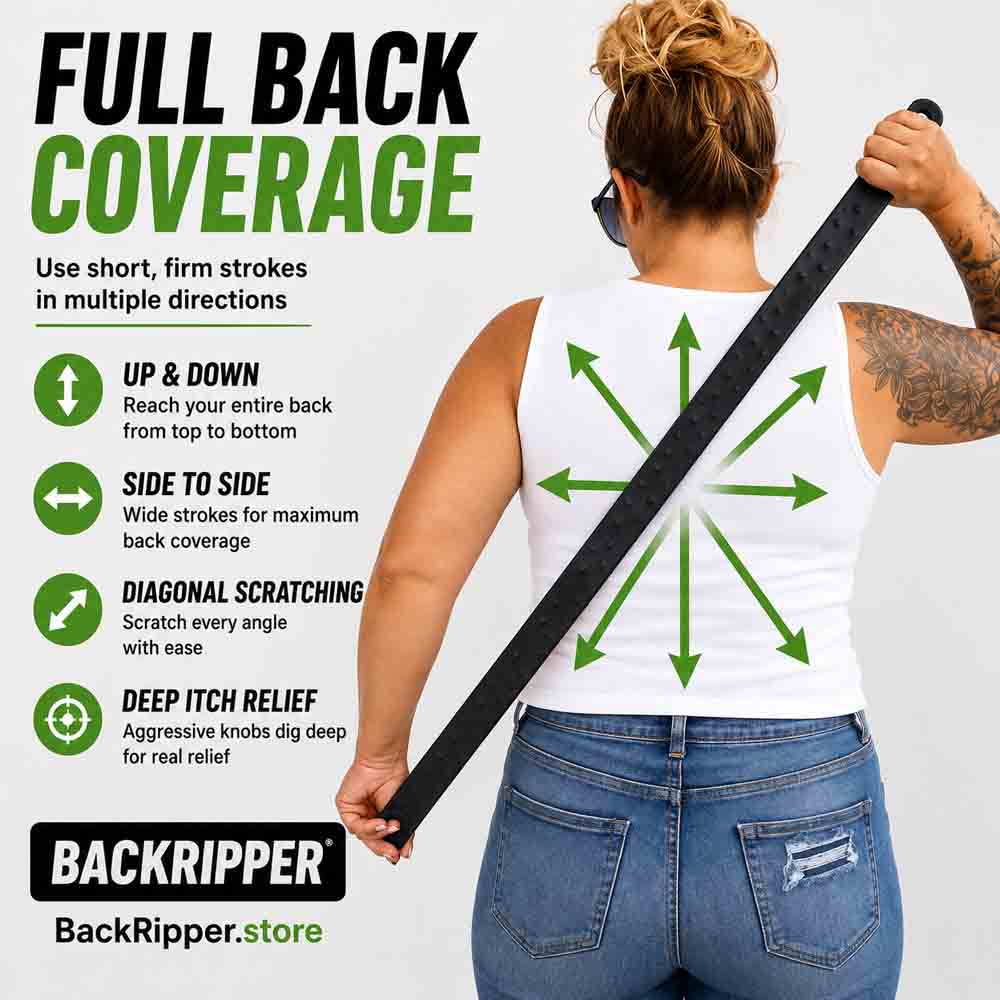
If you regularly need to scratch your back by yourself, a flexible two-hand scratching strap can make the process much easier.
Instead of holding one end of a long stick, you hold one end of the strap in each hand.
You then move the scratching surface diagonally or horizontally across your back.
This gives you much more control over:
- Pressure
- Direction
- Speed
- Angle
- Coverage
A two-hand design can also reach a much larger section of your back in each movement.
BackRipper™ was designed around this approach. Its flexible strap lets you reach the middle, upper, and lower back while controlling the scratching pressure with both hands.
You can see how the design works on our heavy duty back scratcher page.
How to Scratch the Middle of Your Back by Yourself
The middle of the back is usually the hardest area to reach.
If your hands cannot get there, the simplest options are a long-handled scratcher or a flexible strap.
A long-handled scratcher works by extending your reach from one side.
A strap works differently because it wraps around the back. This lets you move the scratching surface directly across the center of your back without having to aim a small claw behind you.
For many people, this feels more natural because both hands are helping guide the tool.
How to Scratch Your Lower Back by Yourself
The lower back is often easier to reach than the middle, but it can still be difficult if the itch is directly behind you.
You can use one hand around your side, a long-handled scratcher, or a strap pulled diagonally across the lower back.
With a strap, one hand can stay low near the hip while the other hand pulls upward, allowing the scratching surface to move across the lower back.
How to Scratch Between Your Shoulder Blades
The area between the shoulder blades is one of the most common trouble spots.
A telescoping scratcher can work well if the itch is small and easy to locate.
If the entire area feels itchy, a wider scratching surface may be more comfortable because you do not have to keep searching for the exact spot.
This is where a two-hand back scratching strap can be useful because it can cover the entire upper-middle area in a few short strokes.
Do Not Scratch Too Hard
A satisfying scratch should not damage your skin.
The American Academy of Dermatology recommends avoiding repeated or aggressive scratching because it can irritate the skin and make itching worse. You can read their guidance on how to relieve itchy skin.
Use enough pressure to relieve the itch, but stop if you feel pain or notice broken skin.
What If Your Back Keeps Itching?
If your back itches occasionally, scratching may be all you need.
If the itch keeps returning, there may be another reason behind it.
Dry skin, irritation, allergies, clothing, sweat, insect bites, and skin conditions can all cause itching.
Mayo Clinic notes that persistent itching can sometimes need medical attention, especially when it lasts a long time or occurs with other symptoms. You can read more about common causes of itchy skin.
A back scratcher can provide temporary relief, but it does not treat the underlying cause of persistent itching.
What Is the Best Way to Scratch Your Back by Yourself?
The best method depends on where the itch is and how much pressure you prefer.
If the itch is easy to reach, your own hand may be enough.
If you need a quick household solution, a towel or shirt can work.
If you want to target one small spot, a telescoping or long-handled back scratcher can be very effective.
If you want stronger pressure and broader coverage, a flexible two-hand back scratching strap can make it much easier to reach your entire back by yourself.
If you want a broader comparison of the different options, read our guide on what is the best way to scratch your back.
Why BackRipper™ Works Well When You Are Alone
BackRipper™ was created specifically to make it easier to scratch hard-to-reach areas without help from another person.
Instead of trying to guide a small claw behind you, you control the scratching surface from both ends.
The flexible design lets the scratching section follow the shape of your back while both hands control the movement.
That makes it useful for people who want strong pressure, broad coverage, and the ability to scratch their own back whenever they need to.
You can view the actual BackRipper™ here: BackRipper™ Back Scratcher.
Frequently Asked Questions
How can I scratch my back if I cannot reach it?
Use a long-handled back scratcher, telescoping scratcher, towel, or flexible two-hand scratching strap. These methods extend your reach without forcing your shoulders into an uncomfortable position.
What can I use to scratch my back at home?
You can use a towel, shirt, smooth door frame, long-handled household item, or a dedicated back scratcher. Avoid anything sharp or rough enough to damage your skin.
How do you scratch the middle of your back?
A long-handled scratcher or flexible two-hand scratching strap works well for the middle of the back because both can reach areas your hands cannot comfortably access.
Is it bad to scratch your back too hard?
Yes. Scratching too hard can irritate or break the skin. Use controlled pressure and stop if scratching causes pain, bleeding, or irritation.
What is the easiest way to scratch your own back?
The easiest method is usually a dedicated back scratcher. A long-handled scratcher works well for one small spot, while a two-hand scratching strap can cover larger areas of the back.
Can you scratch your entire back by yourself?
Yes. A flexible two-hand back scratching strap can reach the upper, middle, and lower back without requiring help from another person.
Our Best Sellers
Looking for a back scratcher that actually works? Explore a few of our top picks, including the BackRipper™ Back Scratcher for strong, full-back coverage and other popular styles for different scratching preferences and budgets.
Shop These Back Scratching Options
-
BackRipper™ Back Scratcher Strap
Original price was: $29.99.$24.99Current price is: $24.99. -
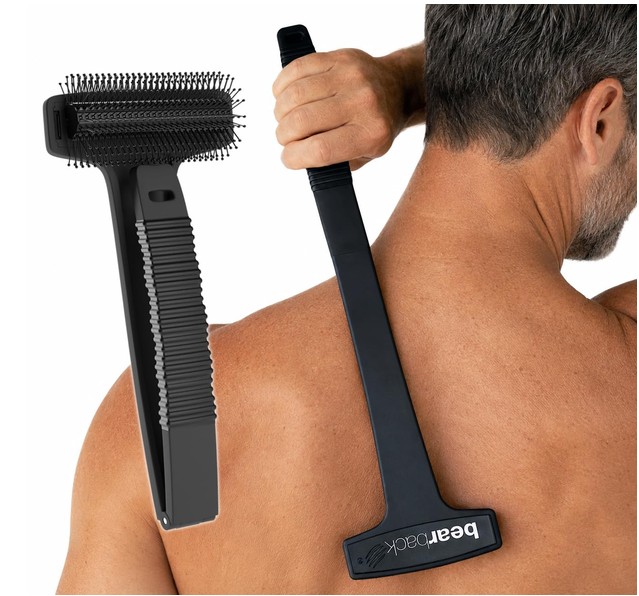
Nylon Bristle Back Scratcher
-

Wall Mounted Back Scratcher